Thursday, May 31, 2012

Friday, May 25, 2012
Gulf Fishermen Reel From Seafood Troubles

It will be many years before any area will recover from the oil spill disaster in the Gulf. Now, more than ever, we should look at sustainable agriculture to help with our growing need for a more abundant food supply!
LAFITTE, La. — Gloom infects the hard-working shrimp and crab docks of this gritty fishing town as the
second full year of fishing since BP's catastrophic oil spill kicks into high gear.
Usually folks are upbeat and busy in May, when shrimpers get back to work in Louisiana's rich waters. This spring, though, catches are down, docks are idle and anxiety is growing that the ill effects of the massive BP oil spill may be far from over.
An Associated Press examination of catch data from last year's commercial harvest along the Gulf – the first full year of fishing since the 2010 spill – reveals merit in the fishermen's complaints. According to the analysis of figures obtained through public records requests, seafood crops hit rock bottom in the Barataria estuary, the same place where some of the thickest waves of oil washed in when a BP well exploded in the Gulf of Mexico.
Detailed data from "trip tickets" fishermen fill out when they unload at docks reveal steep drops in Barataria, though it's far from bleak everywhere along the Gulf Coast. Fishermen are making money that is pretty equal to before the spill, according to the 2011 data not officially released yet by the National Marine Fisheries Service.
Part of the reason is that though the fishermen aren't hauling in as much, prices are up so people are paying more for seafood from the Gulf than other sources.
In Barataria, the number of shrimpers in the water has remained steady, yet the fall season was off by about 7 million pounds from an average of 18.1 million pounds between 2006 and 2009. It wasn't a pretty picture for blue crabs either in Barataria: the crab catch was off by 2.7 million pounds from an average of 9.5 million pounds between 2006 and 2009, the data showed.
Fresh water from a historically high Mississippi River could have been the culprit for some of the drop off in productivity, marine experts said. Another factor may be that some areas in the estuary were closed due to oil contamination. One such place is Bay Jimmy, where oil is still gooey and thick on the shores.
Fishermen blame the spill. In Lafitte, they said the new shrimp season was off to a slow start.
"I'm afraid that oil spill has ruined us," said Ken Lee, a shrimp dock owner. "We're hardly unloading any brown shrimp at all."
But Lee shook his head as he looked over a sheet tallying recent shrimp loads in the past few days. It was slim pickings. Moments before, an 18-wheeler pulled away from his dock with just seven vats of frozen fresh shrimp. The truck has room for more than 40, he said.
"That's pitiful!" he said. "We usually load a truck full."
While catches were off, though, prices were high. The Louisiana data shows fishermen actually made as much or more in 2011 than they had in previous years. The total values of the blue crab and oyster harvests were higher than the six-year average.
Taken as a whole, the volume of seafood harvested last year in Louisiana for shrimp, crabs and oysters showed only modest drops from averages for 2003-2009, according to the AP analysis. Catches for 2010, the year of the spill, were excluded because much of the Gulf was shut down. Meanwhile, in Texas, the oyster and crab hauls were down slightly from 2003-2009 averages, the AP analysis showed.
Drought could have been a cause there, a Texas official said. The state did not have figures on its shrimp catch. Florida's data showed no major swings in harvests of oysters, crabs and shrimp. Mississippi's shrimp haul was down about 13 percent from 2003-2009 averages and its small-scale crab harvest was down 52 percent. From the 2003-2009 average, Alabama's brown shrimp catch was off 12 percent, blue crabs were off 27 percent and oysters down by about 50 percent, the state's data showed.
Fishermen say economic conditions were tough before the BP spill due to imports, high fuel prices and hurricanes. But now they say they've reached a low point since the blown-out well spewed more than 200 million gallons of oil.
In Bon Secour, Ala., Mike Skinner, a third-generation shrimper whose entire family works in the business, said last fall was the worst season he had ever seen.
"Hopefully it was a fluke thing. We'll find out this year," he said as he piloted his trawler across Mobile Bay.
In Alabama, seafood sales are down about 10 percent to $146 million in the two years since the BP gusher, according to an Auburn University study obtained by the AP. The downturn represented nearly $16 million in lost sales and has left few fishing boats in industry hubs like the Bon Secour River.
To ease the hardships, BP has given $48.5 million to Gulf states so they can market their seafood industries on websites, TV commercials, billboards and print ads that say the catch is healthy.
BP spokesman Craig Savage said the Gulf seafood industry was strong. "The fact is, the data show that seafood from the Gulf of Mexico is safe and abundant, according to numerous government reports," he said.
Truly identifying any effect of the spill – if any – on marine stocks won't be possible from landings data for several years, said Chuck Wilson, executive director of the Louisiana Sea Grant College Program, a university-based group of agents and researchers.
Still, there's reason to be wary, said Olivia Watkins, a spokeswoman for the Louisiana Department of Wildlife and Fisheries.
"We are seeing a number of anomalies in the Gulf of Mexico," Watkins said. "We should not attempt to draw premature conclusions."
The long-term prognosis for the Gulf's health remains uncertain.
Recent studies have found higher numbers of sick fish close to where BP's well blew out and genome studies of bait fish in Barataria have identified abnormalities. Meanwhile, vast areas of the cold and dark Gulf seafloor are oiled, scientists say.
And many fishermen are convinced something's amiss.
"I think the oil can kill the shrimp eggs. That's why there was no shrimp to catch last year," said Tuna Pham, a 40 -year-old Vietnamese-American shrimper docked in Lafitte. He said the catch this year was bad again.
"We was there to work, but couldn't," said Lawrence Salvato, 49, as he stopped for lunch on a dock where he moors a shrimp skiff he runs his wife, Lisa. "Usually people are excited and they can't wait to get out there. This year, there's no real incentive."
He said he made about $10,000 in seafood sales last year compared to $75,000 in 2009. He said his family made do with a $40,000 interim payment they got from BP. Fishermen who haven't settled legally yet with BP over damages continue to survive on periodic payments from a $20 billion trust fund set up by BP.
"We're afraid," Salvato said. "A lot of people are getting out of fishing. They're afraid."
___
Associated Press writer Jay Reeves reported from Bon Secour, Ala.
http://PonicPods.com
http://HuffingtonPost.com
Thursday, May 24, 2012
Circling the Globe With Solar Energy
Neil Wagner
Creator, 'What on Earth?' Comic Strip

Phileas Fogg, protagonist of Jules Vernes' Around the World in Eighty Days made his trek with trains and steamboats ... and more trains and steamboats. While Fogg's perseverance in taking just eighty days to round the globe is praiseworthy, his hearty use of planet-warming fossil fuels ... not so much. But the folks at PlanetSolar have now bested the good Mister Fogg on that count.
The MS Tûranor PlanetSolar -- a $16 million 115-foot watercraft -- recently became the first boat to circumnavigate the globe running entirely on solar power. The ship's 38,000 photovoltaic cells propelled the boat at a speed of 14 knots, allowing the vessel to complete it's round-the-world journey in 585 days. PlanetSolar partners Raphaël Domjan and Immo Ströher first began developing the boat in 2008, as a means to "demonstrate that a motor vessel can function from today without using any fossil fuel and that this clean and eco-aware navigation has undoubtedly a commercial future."
But there are more than just solar boats circling the globe. We're talking solar planes, trains and automobiles.
Planes: The SolarImpulse HB-SIA can already claim the world's first manned 26-hour solar flight. Yes -- it flies at night, too. Now the good folks at SolarImpulse are planning to circle the globe in 2013 with one of their sun-powered flying machines.
Trains: OK, I lied. I know of no solar powered train currently circling our globe. However there IS something exciting happening near Amsterdam. (Isn't there always?) A two-mile long train tunnel, covered with 16,000 solar panels, was completed in Belgium last year. The panels provide power not only to the Paris-to-Amsterdam high-speed line that uses the tunnel, but also reduces the line's carbon footprint, protects nearby trees, and provides electricity for local use.
Automobiles: The SolarWorld Gran Turismo is currently circling our planet. Starting its journey in 2011, the solar-powered two-seater plans to travel 21,000 Guinness-record-setting miles (longest distance covered by a solar car) before its Australian homecoming later this year.
"Clean energy from the sun is there for the taking -- without depleting the Earth's riches," says SolarWorld Americas president Kevin Kilkelly.
I'm just curious how the car handles crossing the oceans. Has it been hitching a ride on the MS Tûranor PlanetSolar?
http://PonicPods.com
http://HuffingtonPost.com
Wednesday, May 23, 2012
'Symphony Of The Soil': New Documentary Connects Soil Health To Human Health
By Lynn Peebles
 Jack Algiere has no qualms about letting his kids eat their
veggies straight out of the ground from the fields and greenhouses he
manages in Pocantico Hills, N.Y.
Jack Algiere has no qualms about letting his kids eat their
veggies straight out of the ground from the fields and greenhouses he
manages in Pocantico Hills, N.Y.
He knows the rich, organic soil will provide Sedge and Ojiah with delicious, nutrient-rich food. Not to mention a possible boost to their immune systems.
His sons have their favorites. "Carrots are up there and consumed after a brush with the shirt sleeve. But spinach in winter seems to be the prize," said Algiere, the farm manager at Stone Barns Center For Food and Agriculture. "With most greens, they prefer to graze -- no hands -- rather than pick."
Perhaps most importantly, Algiere knows that toxic fertilizers and pesticides will not have touched the carrots or spinach, and therefore can't pose any risks to his sons' health.
"Thanks to our improved understanding of the dynamics of soil, the luster of chemical agriculture has worn off," Algiere said. He once worked farmland the conventional way, but said he has since learned that nature really does know best when it comes to warding off unwanted weeds and insects, and feeding a plant what it needs to thrive.
Nature's secret: healthy soil, composed of billions of tiny creatures that essentially become a plant's immune and digestive systems.
But despite the way Algiere manages Stone Barns, many people are acting as soil spoilers, according to a new documentary called "Symphony of the Soil." Our chemical dependencies are stripping soil of its life-giving duties and turning it into lifeless dirt, the film says. We've destroyed half the world's topsoil in the last 50 years, and a quarter of what's left is degraded. Experts in the film suggest that this loss is contributing to a range of today's ills: flooding, droughts, toxic algae blooms, contaminated drinking water, cancer, developmental problems, antibiotic-resistant infections, obesity and more.
"The connection between healthy soil and healthy people is so obvious," said Deborah Koons Garcia, director and producer of the film, which screened last weekend at Stone Barns.
So, when and how did we lose sight of such a vital relationship? And can we find it again?
DEGRADED INTO DIRT
Fred Kirschenmann, a distinguished fellow at the Leopold Center for Sustainable Agriculture at Iowa State University, pointed to his grandfather's generation: The first synthetic nitrogen fertilizers and pesticides emerged from the chemistry of weapons during the world wars, he said.
"[The chemicals] came as a saving grace," Kirschenmann, also board president at Stone Barns, says in the documentary. Greedy farming methods had already begun to increasingly outpace the land's natural production of nitrogen fertilizer, a delicate collaboration between plant, bacteria and other soil microorganisms.
Applying chemical fertilizer, Kirschenmann's grandfather and other farmers could enjoy record returns from their land -- at least for the short term. But it wasn't long before the new tactics triggered a downward spiral for their soil, their crops and the overall health of the nation, the film says.
Research suggests that the addition of synthetic fertilizer lowers a plant's natural defenses against pests. That increased vulnerability attracts more pests and can prompt a farmer to apply increasing amounts of insecticides and herbicides, which often kill beneficial insects and animals along with the intended targets. Over time, such use can lead to pesticide resistance and the need to apply even larger quantities or altogether different chemical concoctions.
 Meanwhile, synthetic fertilizers are also subject to the law of
diminishing returns. More and more may be needed to help plants grow
over time, which is especially true if only one type of plant is grown
in a field. Without a diverse mix or rotation, the soil doesn't get a
well-balanced, nourishing diet; Kirschenmann likened it to a person only
eating French fries every day. What's more, these so-called
monocultures are highly prone to pest outbreaks.
Meanwhile, synthetic fertilizers are also subject to the law of
diminishing returns. More and more may be needed to help plants grow
over time, which is especially true if only one type of plant is grown
in a field. Without a diverse mix or rotation, the soil doesn't get a
well-balanced, nourishing diet; Kirschenmann likened it to a person only
eating French fries every day. What's more, these so-called
monocultures are highly prone to pest outbreaks.
And the cycle continues.
"There's always something else. This is great for pesticide companies," Garcia said. "If you have healthy, alive soil, you don't need chemicals. Healthy soil exudes protection from bad guys."
CHEMICAL CONCERNS
More than 10,000 chemicals are currently registered for agricultural use in the U.S., Paul Hepperly, who was research director of the nonprofit Rodale Institute during filming, says in the documentary. And with the ongoing development of new pesticides and new genetically modified crops designed to withstand them -- one of the latest being 2,4-D-resistant corn -- it doesn't seem like farmers will stop applying the annual 1.1 billion pounds of pesticides.
When a chemical product is used, it is rarely confined to a farmer's fields.
Research suggests that less than half of the synthetic fertilizer is actually absorbed by crops. The excess may be released into the air as a potent greenhouse gas, or it may leak into the soil and water systems, potentially contaminating drinking water and contributing to toxic algae blooms. Pesticides find a similar fate.
In most cases, the health effects of these chemicals or mixtures of chemicals remain unknown. But science is slowly starting to catch up, as The Huffington Post has reported, and prenatal or early childhood exposures appear capable of causing everything from birth defects to cancer to infertility. New research suggests that even tiny amounts of a toxic chemical can prove harmful to a developing child.
A mixture of fertilizer and pesticide chemicals may be particularly dangerous -- and are often found together in waterways. As Warren Porter of the University of Wisconsin, Madison, explains in "Symphony of the Soil," nitrates from fertilizer can worsen the situation by shutting off the body's defenses to toxic chemicals.
"It's like tying your hands behind back," he said.
Even chemical-free operations can pose water woes. Poor soil can mean an increase in the frequency and intensity of both droughts and floods, even without changes in rainfall. (Of course, more extreme weather is predicted with climate change.)
"My prerogative is to protect the water system," said Stone Barns' Algiere, calling water the biggest public health concern for agriculture outside of production.
According to the U.S. Department of Agriculture, soil with a healthy amount of living matter, say 5 percent, can absorb about six times more water than soil containing only 1 percent of organic material. The living content of the soil at Stone Barns tends to fall between 5 and 6 percent.
If there is more absorption, then less soil -- as well as pesticides and fertilizers -- will run off the surface into waterways, and more freshwater will be able to restore aquifers. Further, if the soil soaks up a greater amount of water, it won't need as much additional water later to quench its thirst.
About 70 percent of the planet's fresh water is currently used for agriculture irrigation. And that resource is depleting at a rapid and unsustainable rate. The water level of the Ogallala aquifer in the Midwest, for example, has dropped by more than half in 50 years.
"We need to adjust agriculture to suit nature, not the other way around," Kirschenmann said in an interview with The Huffington Post.
'BETTER LIVING THROUGH BIOLOGY'
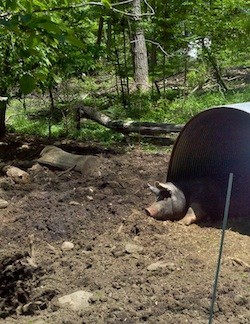 Past Stone Barns' row of greenhouses, and a few hundred feet down a
wooded trail, lies a pair of pigs caked in dark mud under the shade of
trees.
Past Stone Barns' row of greenhouses, and a few hundred feet down a
wooded trail, lies a pair of pigs caked in dark mud under the shade of
trees.
"These animals have a reason to be in the woods," Algiere said. "That is where they're from."
Letting the pigs roll around in their natural surroundings is benefiting the farm as well. "The pigs are digging up invasive species, opening up ground. These are things we never could do with a tractor," Algiere added.
For millennia, animals were a farm staple, pooping out fertilizer and feeding the soil. "When you take animals off the farm, you tend to get too much manure in one place," film director Garcia said, "so you end up with two problems: excess manure and a lack of fertility."
At the same time, having too many animals in one place can cause an array of other problems. Factory farms can become a breeding ground for infectious disease and antibiotic resistance.
"Whatever they're giving the animal is probably killing anything that would have killed that infestation," said Algiere, who uses no antibiotics and often lets his chickens freely roam sections of his fields. "It's all part of the same story."
 Hepperly, of the Rodale Institute, suggests that story needs to be
changed, perhaps by revising the 1960s-era notion that "chemistry was
better than life forces" to one that "lets life live."
Hepperly, of the Rodale Institute, suggests that story needs to be
changed, perhaps by revising the 1960s-era notion that "chemistry was
better than life forces" to one that "lets life live."
"We call this better living through biology," he says.
Jack Algiere's kids, Ojiah and Sedge, graze the fields at Stone Barns Center For Food and Agriculture.
He knows the rich, organic soil will provide Sedge and Ojiah with delicious, nutrient-rich food. Not to mention a possible boost to their immune systems.
His sons have their favorites. "Carrots are up there and consumed after a brush with the shirt sleeve. But spinach in winter seems to be the prize," said Algiere, the farm manager at Stone Barns Center For Food and Agriculture. "With most greens, they prefer to graze -- no hands -- rather than pick."
Perhaps most importantly, Algiere knows that toxic fertilizers and pesticides will not have touched the carrots or spinach, and therefore can't pose any risks to his sons' health.
"Thanks to our improved understanding of the dynamics of soil, the luster of chemical agriculture has worn off," Algiere said. He once worked farmland the conventional way, but said he has since learned that nature really does know best when it comes to warding off unwanted weeds and insects, and feeding a plant what it needs to thrive.
Nature's secret: healthy soil, composed of billions of tiny creatures that essentially become a plant's immune and digestive systems.
But despite the way Algiere manages Stone Barns, many people are acting as soil spoilers, according to a new documentary called "Symphony of the Soil." Our chemical dependencies are stripping soil of its life-giving duties and turning it into lifeless dirt, the film says. We've destroyed half the world's topsoil in the last 50 years, and a quarter of what's left is degraded. Experts in the film suggest that this loss is contributing to a range of today's ills: flooding, droughts, toxic algae blooms, contaminated drinking water, cancer, developmental problems, antibiotic-resistant infections, obesity and more.
"The connection between healthy soil and healthy people is so obvious," said Deborah Koons Garcia, director and producer of the film, which screened last weekend at Stone Barns.
So, when and how did we lose sight of such a vital relationship? And can we find it again?
DEGRADED INTO DIRT
Fred Kirschenmann, a distinguished fellow at the Leopold Center for Sustainable Agriculture at Iowa State University, pointed to his grandfather's generation: The first synthetic nitrogen fertilizers and pesticides emerged from the chemistry of weapons during the world wars, he said.
"[The chemicals] came as a saving grace," Kirschenmann, also board president at Stone Barns, says in the documentary. Greedy farming methods had already begun to increasingly outpace the land's natural production of nitrogen fertilizer, a delicate collaboration between plant, bacteria and other soil microorganisms.
Applying chemical fertilizer, Kirschenmann's grandfather and other farmers could enjoy record returns from their land -- at least for the short term. But it wasn't long before the new tactics triggered a downward spiral for their soil, their crops and the overall health of the nation, the film says.
Research suggests that the addition of synthetic fertilizer lowers a plant's natural defenses against pests. That increased vulnerability attracts more pests and can prompt a farmer to apply increasing amounts of insecticides and herbicides, which often kill beneficial insects and animals along with the intended targets. Over time, such use can lead to pesticide resistance and the need to apply even larger quantities or altogether different chemical concoctions.
Growing a mix of crops keeps the soil happy.
Photo by Lynne Peeples
And the cycle continues.
"There's always something else. This is great for pesticide companies," Garcia said. "If you have healthy, alive soil, you don't need chemicals. Healthy soil exudes protection from bad guys."
CHEMICAL CONCERNS
More than 10,000 chemicals are currently registered for agricultural use in the U.S., Paul Hepperly, who was research director of the nonprofit Rodale Institute during filming, says in the documentary. And with the ongoing development of new pesticides and new genetically modified crops designed to withstand them -- one of the latest being 2,4-D-resistant corn -- it doesn't seem like farmers will stop applying the annual 1.1 billion pounds of pesticides.
When a chemical product is used, it is rarely confined to a farmer's fields.
Research suggests that less than half of the synthetic fertilizer is actually absorbed by crops. The excess may be released into the air as a potent greenhouse gas, or it may leak into the soil and water systems, potentially contaminating drinking water and contributing to toxic algae blooms. Pesticides find a similar fate.
In most cases, the health effects of these chemicals or mixtures of chemicals remain unknown. But science is slowly starting to catch up, as The Huffington Post has reported, and prenatal or early childhood exposures appear capable of causing everything from birth defects to cancer to infertility. New research suggests that even tiny amounts of a toxic chemical can prove harmful to a developing child.
A mixture of fertilizer and pesticide chemicals may be particularly dangerous -- and are often found together in waterways. As Warren Porter of the University of Wisconsin, Madison, explains in "Symphony of the Soil," nitrates from fertilizer can worsen the situation by shutting off the body's defenses to toxic chemicals.
"It's like tying your hands behind back," he said.
Even chemical-free operations can pose water woes. Poor soil can mean an increase in the frequency and intensity of both droughts and floods, even without changes in rainfall. (Of course, more extreme weather is predicted with climate change.)
"My prerogative is to protect the water system," said Stone Barns' Algiere, calling water the biggest public health concern for agriculture outside of production.
According to the U.S. Department of Agriculture, soil with a healthy amount of living matter, say 5 percent, can absorb about six times more water than soil containing only 1 percent of organic material. The living content of the soil at Stone Barns tends to fall between 5 and 6 percent.
If there is more absorption, then less soil -- as well as pesticides and fertilizers -- will run off the surface into waterways, and more freshwater will be able to restore aquifers. Further, if the soil soaks up a greater amount of water, it won't need as much additional water later to quench its thirst.
About 70 percent of the planet's fresh water is currently used for agriculture irrigation. And that resource is depleting at a rapid and unsustainable rate. The water level of the Ogallala aquifer in the Midwest, for example, has dropped by more than half in 50 years.
"We need to adjust agriculture to suit nature, not the other way around," Kirschenmann said in an interview with The Huffington Post.
'BETTER LIVING THROUGH BIOLOGY'
Pigs and soil cohabitate on Algiere's farm.
Photo by Lynne Peeples
"These animals have a reason to be in the woods," Algiere said. "That is where they're from."
Letting the pigs roll around in their natural surroundings is benefiting the farm as well. "The pigs are digging up invasive species, opening up ground. These are things we never could do with a tractor," Algiere added.
For millennia, animals were a farm staple, pooping out fertilizer and feeding the soil. "When you take animals off the farm, you tend to get too much manure in one place," film director Garcia said, "so you end up with two problems: excess manure and a lack of fertility."
At the same time, having too many animals in one place can cause an array of other problems. Factory farms can become a breeding ground for infectious disease and antibiotic resistance.
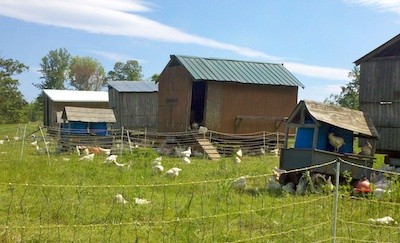
"Whatever they're giving the animal is probably killing anything that would have killed that infestation," said Algiere, who uses no antibiotics and often lets his chickens freely roam sections of his fields. "It's all part of the same story."
Free-range chicken: better for the soil, better for humans.
Photo by Lynne Peeples
http://PonicPods.com
"We call this better living through biology," he says.
Tuesday, May 22, 2012
Hawaii's Beaches are Vanishing Due to Climate Change!
Beach erosion is now affecting one of the most beautiful vacation destinations in the world. With the on going climate change, due to global warming, will we be able to find an answer before it is too late!

Mary Ellen Harte
Aloha to aloha land: Hawaii's beaches are going bye-bye, says the US Geological Service, reports Cornelia Dean at the New York Times. About 10% have vanished over the past century, and rising sea levels from climate change are likely to hasten the process, making it truly a loha land (Sorry, folks, I couldn't resist...)
What happens when you build up deadwood by suppressing fires in Canada's boreal forest and couple it with climate change, which has made the forests drier and created longer, warmer, drier seasons? Disastrous wildfires like the one that burned up much of the town Slave Lake in 2011. Expect more, scientists are now saying, reports Graham Thomson at Postmedia News.
There's money in them thar winds: Mexico is going through a wind energy boom, especially on its southern isthmus, which acts as a natural wind tunnel between the oceans, reports David Garcia at Reuters News. By 2020, the country expects to supply 15% of its electricity via the wind.
Hot times in the US: the National Oceanic and Atmospheric Administration (NOAA) says that from May 2011 to April 2012, the US just experienced its hottest year since recording began in 1895, reports Matt Pearce at the LA Times. Indeed, we haven't had a month cooler than the 20th century national average temperature since February... 1985.
The Perfect Flood: Scientists now say that climate change helped create the disastrous flood that covered 1.3 million square kilometers -- most of Queensland, Australia -- in late 2010 and into 2011. Warmer ocean surface temperatures from global warming boosted the record rain, combined with a strong La Nina weather cycle, and tropical cyclone Tasha, reports Nikki Phillips at the Melbourne Age.
http://PonicPods.com
http://HuffingtonPost.com
Monday, May 21, 2012
Pebble Mine Project Could Degrade Alaska Streams If Not Properly Managed, EPA Claims

AP by Becky Bohrer
JUNEAU, Alaska (AP) — Failure of a large-scale mine planned near the headwaters of one of the world's premier salmon fisheries in Alaska could wipe out or degrade rivers and streams in the region for decades, the U.S. Environmental Protection Agency said in a draft watershed assessment released Friday.
The report responded to concerns about a large copper-and-gold prospect near the headwaters of Bristol Bay. It is a draft, with a final report that could affect permitting decisions perhaps due by the end of the year after public comment and peer review.
The Pebble Partnership, the group behind the Pebble Mine project, has called the deposit one of the largest of its kind in the world, with the potential of producing 80.6 billion pounds of copper, 107.4 million ounces of gold and 5.6 billion pounds of molybdenum over decades.
It has been the subject of a heated public relations battle for years. Supporters say it would bring much-needed jobs to economically depressed rural Alaska, but opponents fear it could fundamentally change the landscape and disrupt, if not destroy, a way of life.
EPA regional administrator Dennis McLerran told reporters the study is not about a single project such as Pebble but instead is a look at the potential impacts of mining in a region that he says accounts for 46 percent of wild sockeye salmon worldwide. He said there are at least seven other claims in advance stages of exploration and development.
The report said that if water from a mine is not managed, contaminants would flow into streams. Even without any failures, the agency said there would still be an impact on fish due to eliminated or blocked streams, removal of wetlands and a reduction in the amount and quality of fish habitat as water is used for mine operations.
It offered no verdict on whether the Pebble Mine project should move forward.
It is based on a hypothetical mine scenario that the agency says draws in part on plans and data put forth by the Pebble Partnership.
Therefore, EPA acknowledges, it may not mirror the location and size of things such as a mine pit or tailings storage facility.
Due to lack to quantitative information on salmon, char and trout populations, the review could not quantify such things as the consequences of habitat degradation or loss on fish populations.
Pebble Partnership CEO John Shively in a statement called EPA's review rushed and inadequate and said he was concerned it could be used as a basis for "unprecedented" regulatory action against the Pebble Project. He said Pebble spent years studying a much smaller area around the deposit while the EPA, with what he called limited time and resources, covered an area of about 20,000 square miles.
He said Pebble is working on an environmental mitigation plan intended to protect fish and water in the area. He couldn't say when that might be presented. "We are working on it but our position has been that we need to get this right, because we're in a sensitive area," he said in an interview.
EPA's assessment put the annual probability of failure for a tailings dam — the kind that could destroy more than 18 miles of salmon stream and degrade the habitat of more streams and rivers for decades — in the range of 1-in-10,000 for a project designed, built and operated using standard engineering practices, to 1-in-one million for a state-of-the-art operation.
The failures evaluated are those that EPA said have occurred at other large-scale mining projects and could occur during operations or after the mine is closed.
Alaska Attorney General Michael Geraghty had fought EPA over the study, calling the agency's actions premature and an overreach — positions echoed by Pebble Partnership.
Geraghty raised concerns the assessment could lead to the agency vetoing mining activity. In a March 9 letter to McLerran, he said that if EPA were to invoke a section of the Clean Water Act that allows it to restrict or bar use of certain waters for dredge or fill materials, it could have the potential to "extinguish" the state's mineral rights and leases held by others.
McLerran said Friday that EPA isn't at a point where a decision on whether to take that step might be made.
Ruth Hamilton Heese, a senior assistant attorney general in Alaska, said in an email that the state, in reviewing the assessment, will, among other things, be looking closely at the data, methodologies and assumptions used, whether the assessment is based on appropriate modeling for the region, and whether it contains any unfounded bias involving any particular development.
"Although we are greatly concerned that there is no legal authority for this assessment, we will thoroughly evaluate it and seek to protect and promote the best interests of the state, its resources, and its citizens," she said.
Some conservationists and others hailed EPA's action Friday.
Lindsey Bloom, a commercial fisher and organizer with Trout Unlimited, said her first impression of the assessments was that it gives her some peace of mind.
"After all the years I've fished in Bristol Bay and have been watching this issue, it's good to see someone give it the time and depth of knowledge that it looks like EPA has," Bloom said.
Tim Bristol, Alaska program director for Trout Unlimited, said he hopes this is just a first step and will lead to protections for the region against harmful mining activity.
http://PonicPods.com
http://HuffingtonPost.com
Friday, May 18, 2012
Exxon Oil Spill: Montana Investigates Sites From Last Year's Yellowstone River Spill
AP] By Matthew Brown

BILLINGS, Mont. (AP) — Montana officials said Wednesday they
are investigating several sites with suspected oil left over from an
Exxon Mobil pipeline break last year, but recent tests showed at least
one such site downstream of the spill is oil-free.
The July 1 accident spilled an estimated 1,500 barrels of crude oil, or 63,000 gallons, into the Yellowstone River near Laurel.
In recent weeks, Montana Fish, Wildlife and Parks workers have found sheens or other evidence of oil at several sites downstream of the spill, said agency spokesman Bob Gibson.
Department of Environmental Quality scientist Laura Alvey said that includes a sheen she saw last week on an island east of Laurel. She said there was "no question" the sheen came from oil. Officials are on the lookout for more crude to get stirred up in coming weeks as high waters from mountain snowmelt shift sandbars that could hold trapped oil.
However, recent tests on water and sediment samples at another site, a riverfront residence near Laurel, were negative for oil contamination. Earlier tests in the vicinity of a fish kill near Huntley about two months ago also came back negative.
In both cases, Alvey said, the sheens appeared to be naturally occurring — from algae, decomposing organisms or something else besides oil.
Homeowner Jim Swanson had contacted the DEQ after seeing sheens along the river behind his Laurel house. His property suffered extensive contamination last year, which Exxon Mobile Corp. workers attempted to remove as part of an estimated $135 million in cleanup and pipeline repair work.
The
company recovered an estimated 1 percent of the oil spilled, which
marred about 70 miles of shoreline and numerous islands in the river
channel.
"I was looking at Mr. Swanson as a worst-case scenario and thinking if (the sample results) came back dirty, we would have to do more work or have Exxon go out and do more work," Alvey said.
That could still happen if the sites with suspected oil identified by Fish, Wildlife and Parks are confirmed for contamination. Gibson said it is uncertain when the test results will come back.
As part of a settlement over state water pollution law violations, Exxon is obliged to do any additional cleanup work that is necessary. However, government regulators and the company already have agreed that much of the remaining contamination should be left in place to naturally degrade.
Exxon is monitoring 45 such sites along the river to gauge whether that is working.
Swanson welcomed Wednesday's news that there were no toxic compounds in the sheens found on his property but said it "boggles my mind" that they could be from something other than oil.
He said he can still see rings of degraded oil around trees and rocks on his property and oil in brush that was left to break down naturally.
"The fact remains they only recovered 1 percent," Swanson said. "There's still an ugliness there but at least it's not toxic and at least it's going away."
Swanson is a plaintiff in a lawsuit against Exxon from riverfront landowners who allege they suffered diminished property values and other damages because of the spill. A trial in the case is set for October 2013 before state District Judge Gregory Todd in Billings.
Exxon spokeswoman Amber Flournoy said in an emailed statement that the company remains committed to a full cleanup and remediation.
"We continue to work cooperatively with the (DEQ)," Flournoy wrote. She added that the company "has agreed to monitor and document the degradation of visible oil over time."
Additional lab tests are pending on fish collected from the river by state biologists last month. Evidence of oil was found in some fish last year, but officials said it was not at high enough levels to pose a threat to people who might eat them.
The latest round of tests is meant to determine if there were any residual effects on fish that came into contact with oil.
Although the oil itself likely would have worked its way through a fish's system, Gibson said, a fish still "may have liver problems or gall bladder problems, some residual damage that would indicate petroleum hydrocarbons."
That information will be used in part to determine how much Exxon will be asked to pay to cover natural resource damages from the spill. The investigation into those damages could take years to complete and is separate from the DEQ cleanup-related work.
http://PonicPods.com
http://HuffingtonPost.com
In this July 2,2011 file photo oil from a ruptured ExxonMobil
pipeline is seen in the Yellowstone River and along its banks near
Laurel, Mont.
The July 1 accident spilled an estimated 1,500 barrels of crude oil, or 63,000 gallons, into the Yellowstone River near Laurel.
In recent weeks, Montana Fish, Wildlife and Parks workers have found sheens or other evidence of oil at several sites downstream of the spill, said agency spokesman Bob Gibson.
Department of Environmental Quality scientist Laura Alvey said that includes a sheen she saw last week on an island east of Laurel. She said there was "no question" the sheen came from oil. Officials are on the lookout for more crude to get stirred up in coming weeks as high waters from mountain snowmelt shift sandbars that could hold trapped oil.
However, recent tests on water and sediment samples at another site, a riverfront residence near Laurel, were negative for oil contamination. Earlier tests in the vicinity of a fish kill near Huntley about two months ago also came back negative.
In both cases, Alvey said, the sheens appeared to be naturally occurring — from algae, decomposing organisms or something else besides oil.
Homeowner Jim Swanson had contacted the DEQ after seeing sheens along the river behind his Laurel house. His property suffered extensive contamination last year, which Exxon Mobile Corp. workers attempted to remove as part of an estimated $135 million in cleanup and pipeline repair work.
"I was looking at Mr. Swanson as a worst-case scenario and thinking if (the sample results) came back dirty, we would have to do more work or have Exxon go out and do more work," Alvey said.
That could still happen if the sites with suspected oil identified by Fish, Wildlife and Parks are confirmed for contamination. Gibson said it is uncertain when the test results will come back.
As part of a settlement over state water pollution law violations, Exxon is obliged to do any additional cleanup work that is necessary. However, government regulators and the company already have agreed that much of the remaining contamination should be left in place to naturally degrade.
Exxon is monitoring 45 such sites along the river to gauge whether that is working.
Swanson welcomed Wednesday's news that there were no toxic compounds in the sheens found on his property but said it "boggles my mind" that they could be from something other than oil.
He said he can still see rings of degraded oil around trees and rocks on his property and oil in brush that was left to break down naturally.
"The fact remains they only recovered 1 percent," Swanson said. "There's still an ugliness there but at least it's not toxic and at least it's going away."
Swanson is a plaintiff in a lawsuit against Exxon from riverfront landowners who allege they suffered diminished property values and other damages because of the spill. A trial in the case is set for October 2013 before state District Judge Gregory Todd in Billings.
Exxon spokeswoman Amber Flournoy said in an emailed statement that the company remains committed to a full cleanup and remediation.
"We continue to work cooperatively with the (DEQ)," Flournoy wrote. She added that the company "has agreed to monitor and document the degradation of visible oil over time."
Additional lab tests are pending on fish collected from the river by state biologists last month. Evidence of oil was found in some fish last year, but officials said it was not at high enough levels to pose a threat to people who might eat them.
The latest round of tests is meant to determine if there were any residual effects on fish that came into contact with oil.
Although the oil itself likely would have worked its way through a fish's system, Gibson said, a fish still "may have liver problems or gall bladder problems, some residual damage that would indicate petroleum hydrocarbons."
That information will be used in part to determine how much Exxon will be asked to pay to cover natural resource damages from the spill. The investigation into those damages could take years to complete and is separate from the DEQ cleanup-related work.
http://PonicPods.com
http://HuffingtonPost.com
Friday, May 11, 2012
FDA Allows Mold, Insects, Rodent Hairs, Ammonia, Arsenic and Maggots In ‘Reconditioned’ Food
FDA Allows Corporations to ‘Recondition’ Old Food
Susanne Posel, ContributorIn order to save money, some corporations will repackage older food into new packaging and resell it. One public school lunch supplier tried this with moldy apple sauce re-canned and was reprimanded to never try that “stunt” again.
The FDA was contacted by Snokist Growers of Yakima, Washington. This is just one group trying to ensure “reworking” food is not a normal practice.
“I was appalled that there were actually human beings that were OK with this,” said Kantha Shelke, a food scientist and spokeswoman for the Institute of Food Technologists. “This is a case of unsafe food. They are trying to salvage that to make a buck.”
Shockingly, Jay Cole, former federal inspector who works with the FDA Group, says, “Any food can be reconditioned.”
Perhaps pieces of pasta will be re-ground into semolina.
Mislabeled blueberry ice cream mixed with chocolate to avoid waste.
Insect parts discovered in cocoa beans.
Live bugs “left behind” in dried fruits packages.
Or salmonella bacteria found in hydrolyzed vegetable protein (HVP) which is a flavor enhancer used in gravy mix, snack foods, dairy products, spices and soups (just to name a few).
“This is how people do their business,” says Shelke.
The FDA allowed food producers like Basic Food Flavors, Inc (BFF) to recondition their recalled items in 2010 by heat-treating their products to remove salmonella. BFF then reprocessed the food and distributed them for sale to the public.
The FDA justifies this unsafe practice by stating that it reduces water and saves money. Yet this occurs at the expense of public safety and health.
If the processes approved by the FDA were redering food safe for consumption, there would be less of an issue.
The Snokist officials found that the process the FDA permitted as safe for the reconditioning of the applesauce rendered the food sterile and effectively worthless as a nutritional substance by a common toxin produced by the mold in the apple sauce.
The FDA stands by its thermal process even though it does not protect against mycotoxins in the food.
“Mold is not an easily reconditionable product,” says William Correll, the FDA’s acting director of compliance.
The FDA admits they expect a certain level of contaminants and toxins to enter food during the processing process because they claim a zero-tolerance policy would be too difficult to achieve.
The FDA relies on defect action levels to define how dangerous a contaminant is in the food and how much enforcement of their policies they should engage the manufacturer in.
Basically, if making the food safe is too difficult, the FDA does not bother enforcing their safety policies.
Here are a few examples of allowable contaminants:
• In 8 ounces of macaroni there could be 225 insect fragments or 4.5 rodent hairs
• In 3.5 oz of canned mushrooms 20 or more maggots is ok
• In canned cranberry sauce there could be an average of 15% mold
The FDA finds these levels acceptable because there would be too much stress on food producers to adhere to a more stringent policy for food safety.
Correll plainly says, “You can’t cook the poop out of [food].”
The FDA begun the Reportable Food Registry in 2009 to handle the overwhelming notifications to human health hazards their relaxed policies produced.
The problems were hard to decipher with domestic food processing corporations, but foreign import food corporations added a cog in the wheel. These corporations generally go to greater lengths to preserve the safety of their food; more so than the FDA.
As it stands, the FDA reconditions food that we purchase in grocery stores.
There is no way to know what foods are genuine and which have been reconditioned.
On top of the already shocking list we can add the ammonia pink slime in beef:
High Pay Beef Industry Job For Official Who Approved Ammonia Treated “Pink Slime”

The official who approved the use of an ammonia treated sludge, found in 70% of supermarket ground beef and 7 million pounds of beef headed for school cafeterias, went onto take a high paying industry job.
An ABC News report reveals that the Under Secretary of Agriculture, Joann Smith, who approved the use of ammonia treated sludge in ground beef products as a substitute to counter skyrocketing costs of beef later received a high paying job in the beef industry.To add insult to injury, the latest reports also reveal that over 7 million pounds of the sludge is headed to school cafeterias nationwide following the voluntary discontinuance of the product by many companies in the nationwide.
By Alexander Higgins
http://PonicPods.com
http://Blog.AlexanderHiggins.com
Thursday, May 10, 2012
Antibiotic Resistance Spreads Through Environment, Threatens Modern Medicine

Lynne Peeples
lynne.peeples@huffingtonpost.com
 Waste from people, pets, pigs
and even seagulls may be playing a significant role in the rise of
antibiotic-resistant infections, including methicillin-resistant
Staphylococcus aureus (MRSA), a number of new studies warn.
Waste from people, pets, pigs
and even seagulls may be playing a significant role in the rise of
antibiotic-resistant infections, including methicillin-resistant
Staphylococcus aureus (MRSA), a number of new studies warn.
Widespread fear of diminishing returns for modern medicine is becoming amplified, scientists say, by the discovery of soils and waterways polluted with both traces of antibiotics and bacteria encoded with antibiotic-resistant genes, the information that tells a microbe how to evade drugs designed to kill it. And even if that fortified microbe isn't capable of causing illness in humans itself, scientists add, its DNA could find its way into the more malignant microbes in the environment.
"Antibiotic resistance is likely the biggest public health challenge that we'll be facing this century," said Amy Pruden, an expert on antibiotic resistance at Virginia Tech University. "We're in a state of complacency right now. We count on antibiotics working for us, but they are slowly starting to lose their effectiveness."
While progress has been made in the clinical realm -- limiting unnecessary uses of antibiotics, for example, and encouraging patients to take the full course of their prescribed drugs -- Pruden noted "mounting evidence that the environment is another important piece of the puzzle."
Drug residues and bacteria with drug-resistant genes can pass together through a human's or animal's gut and into the environment, even if the living contaminants take a detour through a wastewater treatment plant.
In a study published on Tuesday, Scottish researchers found that relatively low concentrations of antibiotics in certain environments -- such as river sediments, swine feces lagoons and farmed soil -- may be enough to speed along the proliferation of the drug-resistant genes. It's another survival-of-the-fittest story: Bacteria that can withstand the drugs will survive and reproduce, while their antibiotic-susceptible counterparts die out.
The winning genes then have the potential to infiltrate drinking water or produce, which increases human exposure and raises the likelihood that the genes will spread.
"Antibiotic
resistance is such a big global health concern," said Alfredo Tello of
the University of Stirling, lead researcher on the study. "We need to
consider the effect that antibiotics released into the environment can
have on development of this resistance."
Adding to the danger is the fact that bacteria can easily swap genes with each other. A bacterium that passes through the intestines into the local waterway, for example, may not itself be a pathogen that normally threatens human health, but that benign bug can share its drug-tolerating secrets.
"It's not necessarily important what species is holding on to the DNA as long as the DNA is held on to and propagated," explained David Cummings, a biologist at Point Loma Nazarene University in San Diego. "Then it can later be released to cause disease in an animal, plant or human."
Cummings' own research has identified dangerous DNA in the river sediments around San Diego and across the Mexican border into Tijuana.
"These coastal wetland habitats are becoming sinks and ultimately sources for drug-resistant bacteria -- more importantly, sinks for the DNA that provide resistance," said Cummings, who points his finger at pet waste, bird feces, leaky sewer pipes and hospital waste effluent as the likely culprits in the San Diego area, which is home to few livestock operations. "We've tinkered with a lot of resistance genes, and anything we look for, we find."
A separate study published last month also emphasized the importance of oft-overlooked aquatic sources of antibiotic resistance. Canadian researchers analyzed four different bodies of water affected by varying levels of human activity. They found resistance genes at all four sites, although the intensity varied: A harbor hosting sewer overflows suffered from higher levels than a nature preserve.
"Antibiotic resistance is widespread in aquatic environments ranging from heavily impacted urban sites to remote areas," Lesley Warren of McMaster University in Canada, and the lead researcher on the study, said in a statement. "The presence of environmental bacterial communities in aquatic environments represents a significant, largely unknown source of antibiotic resistance."
What's more, antibiotic residue and resistance genes may be spread farther and more widely by wildlife, particularly seabirds. Researchers at the University of Miami recently found a large number of seagulls and pelicans were host to bacteria associated with broad-spectrum resistance to infectious bugs, such as the E. coli that causes urinary tract infections in women.
It is becoming increasingly evident that the world's dire antibiotic-resistance problem involves a lot of players, all acting through a variety of complicated means. So what should be done?
"The solutions need to come from upstream, figuratively and literally," said Cummings. "That can be public education, improving our wastewater management and treatment -- even something as simple, albeit expensive, as separating stormwater from the sewage system." The latter would limit the untreated sewage flowing into waterways.
Of course, excrement from livestock is subject to even looser waste management practices than human waste.
The use of antibiotics in livestock is the subject of ongoing debate. According to the latest estimates from the U.S. Food and Drug Administration, 80 percent of the country's antibiotics are given to food animals, predominantly for the purpose of promoting growth or preventing disease, rather than for treating illness.
Also published this Tuesday was a study implicating the widespread use of antibiotics in swine feed. Not only do antibiotic-resistant genes end up in the soil and wastewater around the feedlots, but researchers suggest the genes are often spread further by the application of the waste on crop lands.
In response to the growing concerns, the FDA released contentious guidelines last month that ask pork, beef and poultry producers to choose to stop using antibiotics for fattening up their livestock. As The Huffington Post reported in March, the agency has also been ordered by a federal court to follow through on a rule proposed in 1977 that would withdraw approvals for most non-therapeutic uses of penicillin and tetracyclines in livestock, drugs particularly crucial in human medicine.
"Every time you use antibiotics, you can select for resistance," said Gail Hansen, senior officer with the Pew Campaign on Human Health and Industrial Farming. "When giving them to healthy animals for no reason other than to get them to grow faster or compensate for unhygienic conditions, you're adding to that."
"The new research," added Hansen, "really points out that antibiotics aren't just affecting the bacteria while they're inside the pig."
http://:PonicPods.com
http://HuffingtonPost.com
Widespread fear of diminishing returns for modern medicine is becoming amplified, scientists say, by the discovery of soils and waterways polluted with both traces of antibiotics and bacteria encoded with antibiotic-resistant genes, the information that tells a microbe how to evade drugs designed to kill it. And even if that fortified microbe isn't capable of causing illness in humans itself, scientists add, its DNA could find its way into the more malignant microbes in the environment.
"Antibiotic resistance is likely the biggest public health challenge that we'll be facing this century," said Amy Pruden, an expert on antibiotic resistance at Virginia Tech University. "We're in a state of complacency right now. We count on antibiotics working for us, but they are slowly starting to lose their effectiveness."
While progress has been made in the clinical realm -- limiting unnecessary uses of antibiotics, for example, and encouraging patients to take the full course of their prescribed drugs -- Pruden noted "mounting evidence that the environment is another important piece of the puzzle."
Drug residues and bacteria with drug-resistant genes can pass together through a human's or animal's gut and into the environment, even if the living contaminants take a detour through a wastewater treatment plant.
In a study published on Tuesday, Scottish researchers found that relatively low concentrations of antibiotics in certain environments -- such as river sediments, swine feces lagoons and farmed soil -- may be enough to speed along the proliferation of the drug-resistant genes. It's another survival-of-the-fittest story: Bacteria that can withstand the drugs will survive and reproduce, while their antibiotic-susceptible counterparts die out.
The winning genes then have the potential to infiltrate drinking water or produce, which increases human exposure and raises the likelihood that the genes will spread.
Adding to the danger is the fact that bacteria can easily swap genes with each other. A bacterium that passes through the intestines into the local waterway, for example, may not itself be a pathogen that normally threatens human health, but that benign bug can share its drug-tolerating secrets.
"It's not necessarily important what species is holding on to the DNA as long as the DNA is held on to and propagated," explained David Cummings, a biologist at Point Loma Nazarene University in San Diego. "Then it can later be released to cause disease in an animal, plant or human."
Cummings' own research has identified dangerous DNA in the river sediments around San Diego and across the Mexican border into Tijuana.
"These coastal wetland habitats are becoming sinks and ultimately sources for drug-resistant bacteria -- more importantly, sinks for the DNA that provide resistance," said Cummings, who points his finger at pet waste, bird feces, leaky sewer pipes and hospital waste effluent as the likely culprits in the San Diego area, which is home to few livestock operations. "We've tinkered with a lot of resistance genes, and anything we look for, we find."
A separate study published last month also emphasized the importance of oft-overlooked aquatic sources of antibiotic resistance. Canadian researchers analyzed four different bodies of water affected by varying levels of human activity. They found resistance genes at all four sites, although the intensity varied: A harbor hosting sewer overflows suffered from higher levels than a nature preserve.
"Antibiotic resistance is widespread in aquatic environments ranging from heavily impacted urban sites to remote areas," Lesley Warren of McMaster University in Canada, and the lead researcher on the study, said in a statement. "The presence of environmental bacterial communities in aquatic environments represents a significant, largely unknown source of antibiotic resistance."
What's more, antibiotic residue and resistance genes may be spread farther and more widely by wildlife, particularly seabirds. Researchers at the University of Miami recently found a large number of seagulls and pelicans were host to bacteria associated with broad-spectrum resistance to infectious bugs, such as the E. coli that causes urinary tract infections in women.
It is becoming increasingly evident that the world's dire antibiotic-resistance problem involves a lot of players, all acting through a variety of complicated means. So what should be done?
"The solutions need to come from upstream, figuratively and literally," said Cummings. "That can be public education, improving our wastewater management and treatment -- even something as simple, albeit expensive, as separating stormwater from the sewage system." The latter would limit the untreated sewage flowing into waterways.
Of course, excrement from livestock is subject to even looser waste management practices than human waste.
The use of antibiotics in livestock is the subject of ongoing debate. According to the latest estimates from the U.S. Food and Drug Administration, 80 percent of the country's antibiotics are given to food animals, predominantly for the purpose of promoting growth or preventing disease, rather than for treating illness.
Also published this Tuesday was a study implicating the widespread use of antibiotics in swine feed. Not only do antibiotic-resistant genes end up in the soil and wastewater around the feedlots, but researchers suggest the genes are often spread further by the application of the waste on crop lands.
In response to the growing concerns, the FDA released contentious guidelines last month that ask pork, beef and poultry producers to choose to stop using antibiotics for fattening up their livestock. As The Huffington Post reported in March, the agency has also been ordered by a federal court to follow through on a rule proposed in 1977 that would withdraw approvals for most non-therapeutic uses of penicillin and tetracyclines in livestock, drugs particularly crucial in human medicine.
"Every time you use antibiotics, you can select for resistance," said Gail Hansen, senior officer with the Pew Campaign on Human Health and Industrial Farming. "When giving them to healthy animals for no reason other than to get them to grow faster or compensate for unhygienic conditions, you're adding to that."
"The new research," added Hansen, "really points out that antibiotics aren't just affecting the bacteria while they're inside the pig."
http://:PonicPods.com
http://HuffingtonPost.com
Wednesday, May 9, 2012
Great Pacific Garbage Patch: Plastic Debris In Ocean Impacting Marine Life

The Pacific Marine Ecosystem is drastically changing on a daily basis. We need to act now, before it's too late!
SAN DIEGO (AP) — An increase in plastic debris floating in a zone between Hawaii and California is changing the environment of at least one marine critter, scientists reported.
Over the past four decades, the amount of broken-down plastic has grown significantly in a region dubbed the "Great Pacific Garbage Patch." Most of the plastic pieces are the size of a fingernail.
During a seagoing expedition, researchers from the Scripps Institution of Oceanography found that a marine insect that skims the ocean surface is laying its eggs on top of plastic bits instead of natural flotsam like wood and seashells.
Though plastic debris is giving the insects places to lay eggs, scientists are concerned about the manmade material establishing a role in their habitat.
"This is something that shouldn't be in the ocean and it's changing this small aspect of the ocean ecology," said Scripps graduate student Miriam Goldstein.
The finding will be published online Wednesday in Biology Letters, a journal of Britain's Royal Society.
Goldstein led a group of researchers who traveled 1,000 miles off the California coast in August 2009 to document the impacts of the garbage on sea life. For three weeks, they collected marine specimens and water samples at varying depths, and deployed mesh nets to capture plastic particles.
Thousands of tons of plastic waste enter the oceans every year and break down into smaller pieces over time. Some wind up in the Great Pacific Garbage Patch, a vortex formed by ocean and wind currents.
The garbage patch cannot be seen by satellite. Most of the plastic pieces are confetti-sized flecks spread across thousands of miles of ocean and are hard to see with the naked eye.
A similar plastic trash gyre was recently discovered in the Atlantic between Bermuda and Portugal's Azores islands.
http://PonicPods.com
http://HuffingtonPost.com
Tuesday, May 8, 2012
Climate Impacts Day: 350.org Campaign Connects The Dots Between Extreme Weather And Climate Change

Lucia Graves
lucia@huffingtonpost.com
 Colorful photos and live video streamed in
from events held in more than 100 countries on Saturday where citizens
are "connecting the dots” between global climate change and extreme
weather events.
Colorful photos and live video streamed in
from events held in more than 100 countries on Saturday where citizens
are "connecting the dots” between global climate change and extreme
weather events.
The events, part of “Climate Impacts Day” and coordinated by international climate campaign 350.org, demonstrate how a string of weather disasters around the world provide mounting evidence of the hazards incurred by global warming.
“We just celebrated Earth Day. May 5 is more like Broken Earth Day, a worldwide witness to the destruction global warming is already causing,” said author, environmentalist and 350.org founder Bill McKibben. “People everywhere are saying the same thing: our tragedy is not some isolated trauma, it’s part of a pattern.”
While most scientists caution that no single event can be tied specifically to increased atmospheric greenhouse gases, the frequency of extreme climate events documented across the globe suggests the scope of what's upon us. Indeed, it seems as if extreme weather is now the new normal forecast.
Already photos have come in from New Mexico, where firefighters stand over the remains of the Santa Fe Forest, which burned hundreds of acres of land last summer in what some have described as the state's worst wildfire in history.
In Pakistan women hold up dots before the makeshift structure that became their home after floods devastated Pakistan's Indus river basin, killing 1,600 people and displacing more than 2 million, according to aid officials' estimates. The floods, triggered by unusually heavy monsoon rains in 2010 are the worst in recent history, affecting roughly 8 percent of the population and rendering one fifth of the nation underwater.
In Lebanon, more than 1000 students represented the dots with wheels of an enormous bicycle in protest of pollution that has reached concentrations levels so high that scientists are calling it toxic to human health, linking the air quality in Beirut to a variety of cancers.
A recent poll by Yale University found that seven in 10 Americans believe that “global warming is affecting the weather" and that more than 80 percent of Americans have personally experienced extreme weather or a natural disaster of some sort in the past year.
“Most people in the country are looking at everything that’s happened; it just seems to be one disaster after another after another,” Anthony A. Leiserowitz, one of the Yale researchers who commissioned the new poll, told the New York Times. “People are starting to connect the dots.”
http://PonicPods.com
http://HuffingtonPost.com
The events, part of “Climate Impacts Day” and coordinated by international climate campaign 350.org, demonstrate how a string of weather disasters around the world provide mounting evidence of the hazards incurred by global warming.
“We just celebrated Earth Day. May 5 is more like Broken Earth Day, a worldwide witness to the destruction global warming is already causing,” said author, environmentalist and 350.org founder Bill McKibben. “People everywhere are saying the same thing: our tragedy is not some isolated trauma, it’s part of a pattern.”
While most scientists caution that no single event can be tied specifically to increased atmospheric greenhouse gases, the frequency of extreme climate events documented across the globe suggests the scope of what's upon us. Indeed, it seems as if extreme weather is now the new normal forecast.
Already photos have come in from New Mexico, where firefighters stand over the remains of the Santa Fe Forest, which burned hundreds of acres of land last summer in what some have described as the state's worst wildfire in history.
In Pakistan women hold up dots before the makeshift structure that became their home after floods devastated Pakistan's Indus river basin, killing 1,600 people and displacing more than 2 million, according to aid officials' estimates. The floods, triggered by unusually heavy monsoon rains in 2010 are the worst in recent history, affecting roughly 8 percent of the population and rendering one fifth of the nation underwater.
In Lebanon, more than 1000 students represented the dots with wheels of an enormous bicycle in protest of pollution that has reached concentrations levels so high that scientists are calling it toxic to human health, linking the air quality in Beirut to a variety of cancers.
A recent poll by Yale University found that seven in 10 Americans believe that “global warming is affecting the weather" and that more than 80 percent of Americans have personally experienced extreme weather or a natural disaster of some sort in the past year.
“Most people in the country are looking at everything that’s happened; it just seems to be one disaster after another after another,” Anthony A. Leiserowitz, one of the Yale researchers who commissioned the new poll, told the New York Times. “People are starting to connect the dots.”
http://PonicPods.com
http://HuffingtonPost.com
Monday, May 7, 2012
Fracking Chemical Disclosure Rules Proposed
AP By Matthew Daly
WASHINGTON (AP) — The Obama administration said Friday it will for the first time require companies drilling for oil and natural gas on public and Indian lands to publicly disclose chemicals used in hydraulic fracturing operations.
The proposed "fracking" rules also set standards for proper construction of wells and wastewater disposal.
Interior Secretary Ken Salazar said the long-awaited rules will allow continued expansion of drilling while protecting public health and safety.
"As we continue to offer millions of acres of America's public lands for oil and gas development, it is critical that the public have full confidence that the right safety and environmental protections are in place," Salazar said.
The proposed rules will "modernize our management of well-stimulation activities, including hydraulic fracturing, to make sure that fracturing operations conducted on public and Indian lands follow common-sense industry best practices," he said.
The new rules, which have been under consideration for a year and a half, were softened after industry groups expressed strong concerns about an initial proposal leaked earlier this year. The proposal would allow companies to file disclosure reports after drilling operations are completed, rather than before they begin, as initially proposed. Industry groups said the earlier proposal could have caused lengthy delays.
Some environmental groups criticized the change as a cave-in to industry, but Salazar said the rules were never intended to cause delays, but to ensure that the public is "fully aware of the chemicals that are being injected into the underground" by companies seeking to produce oil and natural gas.
The rules would not affect drilling on private land, where the bulk of shale exploration is taking place. A nationwide drilling boom in formations such as the Marcellus Shale in the Appalachian region and the Bakken in North Dakota and Montana, as well as in traditional production states such as Texas, Oklahoma and Louisiana, has led to 10-year lows in natural gas prices.
Still, Salazar said he hopes the new rules could be used as a model for state regulators.
"We hope our leadership is followed," he said at a news conference.
Industry groups and Republican lawmakers say federal rules are unnecessary, arguing that states already regulate hydraulic fracturing, in which water, sand and chemicals are in injected underground to break up dense rock that holds oil and gas.
The industry also has complained that disclosure of chemicals used in fracking could violate trade secrets, although Salazar said the rule would include exemptions for specific formulas. Some of the chemicals used in fracking include benzene, toluene, ethylbenzene and xylene, all of which can cause health problems in significant doses.
Critics say fracking chemicals have polluted water supplies, but supporters say there is no proof.
Tom Amontree, executive vice president for America's Natural Gas Alliance, an industry group, said the Obama administration "may not fully appreciate" significant regulatory steps taken by states such as Colorado, Texas and Wyoming to oversee hydraulic fracturing.
"State regulatory bodies have repeatedly proven that they have the understanding of their state's own unique geologic conditions, the on-the-ground expertise needed to oversee this important work, and most importantly, the ability to respond to rapid change," Amontree said. As drafted, the federal proposal would create reporting requirements and "regulatory impediments" that could substantially affect the ability of companies to drill on public lands, he said.
The proposed rules will be subject to public comment for 60 days, with a final order expected by the end of the year, said Bob Abbey, director of the land management bureau.
http:PonicPods.com
http://Huffingtonpost.com
Friday, May 4, 2012
Wind Farms, Global Warming Connection Lukewarm At Best
by Nino Marchetti 
A study released yesterday by researchers finds that large wind farms may impact local temperatures, noting a night warming effect in certain areas in Texas caused by “the turbulence in turbine wakes acting like fans to pull down warmer near surface air from higher altitudes at night.” As Natural Resources Defense Council already pointed out, select media outlets covering this study have generated bad headlines which conflate “small-scale, local impacts on nighttime land surface temperatures and global climate disruption.”
To offer some clarity on the subject, the researchers behind the original study have released a detailed Q&A addressing concerns. As Media Matters points out in this Q&A, the scientists basically debunk what is termed “misleading” coverage of the study. Other media outlets, such as Christian Science Monitor and Washington Post, also call into question how the study is being characterized.
To give you insight into the researchers’ own interpretation of their study, we’ve provided the entire Q&A below for your consideration. But here is the net take away: Very likely, the wind turbines do not create a net warming of the air and instead only redistribute the air’s heat from above to near the surface (that is, the turbine itself does not generate any heat). This is fundamentally different from the large-scale warming effect caused by increasing atmospheric concentrations of greenhouse gases.
 What is the major finding of this research?
This study presents the first observational evidence of wind farm impacts on land surface temperature with spatial detail using satellite data.
What is land surface temperature?
Land surface temperature is how hot the “surface” of the Earth would feel to the touch in a particular location. From a satellite’s point of view, the “surface” is whatever it sees when it looks through the atmosphere to the ground. It could be snow and ice, the grass on a lawn, the roof of a building, or the leaves in the canopy of a forest. Thus, land surface temperature is not the same as the air temperature that is included in the daily weather report. Note that the land surface temperature has a larger day-night variation than the surface air temperature.
(source: http://earthobservatory.nasa.gov/GlobalMaps/view.php?d1=MOD11C1_M_LSTDA)
Why do operating wind turbines enhance turbulence and vertical mixing?
Turbulence is small-scale, chaotic almost-random air movement. The spinning rotors of the wind turbines generate turbulence in their wakes – just like the wake from a boat in the water. Wakes from wind turbines can spread a long distance downwind of the turbines. Due to the turbulent nature of the wakes, vertical mixing of lower and upper level air also increases in regions downwind of wind farms.
Why do the operating wind turbines warm nighttime temperature?
This warming effect is most likely caused by the turbulence in turbine wakes acting like fans to pull down warmer near surface air from higher altitudes at night. Typically nighttime has a stable atmosphere with a warm layer overlying a cool layer. Enhanced vertical mixing mixes warm air down and cold air up, leading to a warming near the surface at night. Daytime often has an unstable atmosphere with cool air lying over warmer air. Turbulent wakes mix cool air down and warm air up, producing a cooling near the surface during the day. However, daytime mixing is already very large due to solar heating. Hence, the turbine-enhanced turbulent mixing may play a smaller role during the daytime.
Why do you attribute the warming primarily to wind farms?
Because (a) the spatial pattern of the warming resembles the geographic distribution of wind 2 turbines and (b) the year-to-year land surface temperature over wind farms shows a persistent upward trend from 2003 to 2011, consistent with the increasing number of operational wind turbines with time. FAA data shows that the number of wind turbines over the study region has gone up from 111 in 2003 to 2358 in 2011.
How to interpret the magnitude of the estimated warming effect?
We found a nighttime warming effect over wind farms of up to 0.72 °C per decade relative to nearby non-wind farm regions for the nine-year period during which data was collected. It is important to keep the following points in mind when interpreting our results.
First, the land surface temperature measures the temperature of the Earth’s surface, which has a stronger day-night variation than the surface air temperature from daily weather reports. Therefore, the impacts of wind farms on the surface air temperature should be within the nearsurface boundary layer and smaller than the land surface temperature signal presented in this paper.
Second, as this analysis is from a short period over a region with rapid growth of wind farms, we expect our estimates to give higher values than those estimated in other locations and over longer periods.
Third, we express the warming effect as a linear trend in degrees Celsius per decade units. This is just one simple way to quantify the wind farm impacts while reducing the year-to-year data noise. The estimated warming trend only applies to the study region and to the study period, and thus should not be extrapolated linearly into other regions (e.g., globally) or over longer periods (e.g., for another 20 years). For a given wind farm, the warming effect would likely reach a limit rather than continue to increase if no new wind turbines are added. Considering the complexity of the issue, our results should be interpreted as illustrative rather than definitive.
Fourth, satellite data do contain errors and noise due to cloud contamination and imperfection of retrieval algorithms. Uncertainties also exist in locating wind turbines as well as their operating times. In addition, other factors may also modify local land surface temperature. Considering the complexity of the issue, our results should be interpreted as illustrative rather than definitive.
Finally, compared to impacts of other human-made land use changes, the estimated warming over the wind farms is small. The “urban heat-island” effect, for example, in Austin TX or phoenix in AZ, could be several degrees °C warmer than the surrounding less developed areas.
Overall, the warming effect reported in this study is local and is small compared to the strong background year-to-year land surface temperature changes. Very likely, the wind turbines do not create a net warming of the air and instead only re-distribute the air’s heat near the surface (the turbine itself does not generate any heat), which is fundamentally different from the large-scale warming effect caused by increasing atmospheric concentrations of greenhouse gases.
http://PonicPods.com
http://Earthtechling.com
A study released yesterday by researchers finds that large wind farms may impact local temperatures, noting a night warming effect in certain areas in Texas caused by “the turbulence in turbine wakes acting like fans to pull down warmer near surface air from higher altitudes at night.” As Natural Resources Defense Council already pointed out, select media outlets covering this study have generated bad headlines which conflate “small-scale, local impacts on nighttime land surface temperatures and global climate disruption.”
To offer some clarity on the subject, the researchers behind the original study have released a detailed Q&A addressing concerns. As Media Matters points out in this Q&A, the scientists basically debunk what is termed “misleading” coverage of the study. Other media outlets, such as Christian Science Monitor and Washington Post, also call into question how the study is being characterized.
To give you insight into the researchers’ own interpretation of their study, we’ve provided the entire Q&A below for your consideration. But here is the net take away: Very likely, the wind turbines do not create a net warming of the air and instead only redistribute the air’s heat from above to near the surface (that is, the turbine itself does not generate any heat). This is fundamentally different from the large-scale warming effect caused by increasing atmospheric concentrations of greenhouse gases.
image via Shutterstock
This study presents the first observational evidence of wind farm impacts on land surface temperature with spatial detail using satellite data.
What is land surface temperature?
Land surface temperature is how hot the “surface” of the Earth would feel to the touch in a particular location. From a satellite’s point of view, the “surface” is whatever it sees when it looks through the atmosphere to the ground. It could be snow and ice, the grass on a lawn, the roof of a building, or the leaves in the canopy of a forest. Thus, land surface temperature is not the same as the air temperature that is included in the daily weather report. Note that the land surface temperature has a larger day-night variation than the surface air temperature.
(source: http://earthobservatory.nasa.gov/GlobalMaps/view.php?d1=MOD11C1_M_LSTDA)
Why do operating wind turbines enhance turbulence and vertical mixing?
Turbulence is small-scale, chaotic almost-random air movement. The spinning rotors of the wind turbines generate turbulence in their wakes – just like the wake from a boat in the water. Wakes from wind turbines can spread a long distance downwind of the turbines. Due to the turbulent nature of the wakes, vertical mixing of lower and upper level air also increases in regions downwind of wind farms.
Why do the operating wind turbines warm nighttime temperature?
This warming effect is most likely caused by the turbulence in turbine wakes acting like fans to pull down warmer near surface air from higher altitudes at night. Typically nighttime has a stable atmosphere with a warm layer overlying a cool layer. Enhanced vertical mixing mixes warm air down and cold air up, leading to a warming near the surface at night. Daytime often has an unstable atmosphere with cool air lying over warmer air. Turbulent wakes mix cool air down and warm air up, producing a cooling near the surface during the day. However, daytime mixing is already very large due to solar heating. Hence, the turbine-enhanced turbulent mixing may play a smaller role during the daytime.
Why do you attribute the warming primarily to wind farms?
Because (a) the spatial pattern of the warming resembles the geographic distribution of wind 2 turbines and (b) the year-to-year land surface temperature over wind farms shows a persistent upward trend from 2003 to 2011, consistent with the increasing number of operational wind turbines with time. FAA data shows that the number of wind turbines over the study region has gone up from 111 in 2003 to 2358 in 2011.
How to interpret the magnitude of the estimated warming effect?
We found a nighttime warming effect over wind farms of up to 0.72 °C per decade relative to nearby non-wind farm regions for the nine-year period during which data was collected. It is important to keep the following points in mind when interpreting our results.
First, the land surface temperature measures the temperature of the Earth’s surface, which has a stronger day-night variation than the surface air temperature from daily weather reports. Therefore, the impacts of wind farms on the surface air temperature should be within the nearsurface boundary layer and smaller than the land surface temperature signal presented in this paper.
Second, as this analysis is from a short period over a region with rapid growth of wind farms, we expect our estimates to give higher values than those estimated in other locations and over longer periods.
Third, we express the warming effect as a linear trend in degrees Celsius per decade units. This is just one simple way to quantify the wind farm impacts while reducing the year-to-year data noise. The estimated warming trend only applies to the study region and to the study period, and thus should not be extrapolated linearly into other regions (e.g., globally) or over longer periods (e.g., for another 20 years). For a given wind farm, the warming effect would likely reach a limit rather than continue to increase if no new wind turbines are added. Considering the complexity of the issue, our results should be interpreted as illustrative rather than definitive.
Fourth, satellite data do contain errors and noise due to cloud contamination and imperfection of retrieval algorithms. Uncertainties also exist in locating wind turbines as well as their operating times. In addition, other factors may also modify local land surface temperature. Considering the complexity of the issue, our results should be interpreted as illustrative rather than definitive.
Finally, compared to impacts of other human-made land use changes, the estimated warming over the wind farms is small. The “urban heat-island” effect, for example, in Austin TX or phoenix in AZ, could be several degrees °C warmer than the surrounding less developed areas.
Overall, the warming effect reported in this study is local and is small compared to the strong background year-to-year land surface temperature changes. Very likely, the wind turbines do not create a net warming of the air and instead only re-distribute the air’s heat near the surface (the turbine itself does not generate any heat), which is fundamentally different from the large-scale warming effect caused by increasing atmospheric concentrations of greenhouse gases.
http://PonicPods.com
http://Earthtechling.com
Thursday, May 3, 2012
Japan Nuclear Disaster: Crisis-Hit Country Mulls Shift To Renewable Energy
By ELAINE KURTENBACH and MARI YAMAGUCHI
 TOKYO -- Another long, stupefyingly hot
summer is looming for Japan just as it shuts down its last operating
nuclear power reactor, worsening a squeeze on electricity and adding
urgency to calls for a green energy revolution.
TOKYO -- Another long, stupefyingly hot
summer is looming for Japan just as it shuts down its last operating
nuclear power reactor, worsening a squeeze on electricity and adding
urgency to calls for a green energy revolution.
On Saturday, the last of the country's 50 usable nuclear reactors will be switched off, completely idling a power source that once supplied a third of Japan's electricity. At a time when temptation to set the aircon to deep freeze is at its greatest, companies and ordinary Japanese will be obliged to economize amid temperatures that can climb above 40 degrees Celsius (104 Fahrenheit).
Nuclear energy seemed a steady mainstay of Japan's power supply until the March 11, 2011, tsunami crippled the Fukushima Dai-Ichi plant in the worst atomic accident since the 1986 Chernobyl explosion. Authorities have since tightened safety standards and refrained from restarting reactors that were shut down, mostly for routine checks.
To offset the shortfall, utilities have ramped up oil- and gas-based generation, giving resource-poor Japan, the world's third-largest economy, its biggest annual trade deficit ever last fiscal year. That $100 million-plus a day extra cost, worries over the risks of nuclear power and concern over carbon emissions are leading many decisionmakers to view renewable energy such as solar, hydro and wind more positively.
Prime Minister Yoshihiko Noda has pledged to reduce Japan's reliance on nuclear power over time. And Japan is debating renewable energy targets of between 25 percent to 35 percent of total power generation by 2030, looking to Germany, which raised the proportion of renewables from 5 percent in 1990 to 20 percent by 2010.
"If Japan has the motivation, it can do this, too," said Sei Kato, deputy director of the Environment Ministry's Low Carbon Society Promotion Office. "We have the technological know-how. Japan can do anything that Germany can."
Real change has been slow. Giant solar arrays and wind farms can't be built overnight and powerful utilities that spent billions on nuclear are lobbying to protect their interests. The government is muddling along, seemingly unable to take a decisive stand either way as opinion becomes increasingly polarized between mavericks calling for massive investment in alternative energy sources and big business interests that favor keeping Japan Inc. nuclear powered.
Many believe Japan has little choice but to restart nuclear reactors even in the face of spirited public opposition. Utilities predict power supplies could fall 16 percent below demand in western Japan during the summer peak.
The government is eager to restart some reactors in coming months if it can persuade skeptical local leaders and residents that they are safe.
"The
bottom line is that without nuclear power Japan will have a very hard
time meeting demand," said Paul Scalise, a fellow at the University of
Tokyo who specializes in Japan's energy sector.
Oil, coal and gas now generate about nearly 90 percent of Japan's electricity, with hydropower accounting for about 8 percent and other renewables – solar, wind, geothermal and biomass – making up the balance.
The International Energy Agency estimates shutting all nuclear plants increases oil demand by 465,000 barrels a day to 4.5 million barrels a day, raising Japan's daily costs by about $100 million.
Hiroshi Hamasaki, an energy expert at Fujitsu Research Institute, estimates that with stable "feed-in" tariffs, which guarantee renewable energy producers a fixed price for their power, renewable energy generation could surge by 200 times over the next three years.
"There will be a boom close to a bubble, with many companies rushing to enter the market over the next three to five years," Hamasaki said.
Although experts are enthusiastic, green energy in Japan still faces numerous obstacles and headwinds. Besides the nuclear industry's vested interests, those barriers include stifling regulations, a power grid ill-suited to accommodating volatile solar and wind energy, and the huge upfront costs of building solar or geothermal plants. Both are technologies in which Japan is a world leader, although it has lost out to China in solar cost competitiveness.
To help move things along, the government is easing restrictions on land use for solar and wind power. It also is relaxing regulations on small hydropower projects and regulations on drilling for geothermal energy in national parks.
More crucially, last week it approved feed-in tariffs that are expected to spur investment by guaranteeing higher returns for renewable than for conventional energy.
From July, utilities will be required to buy electricity from renewable energy from providers at a rate of 42 yen ($0.52) per kilowatt hour (kwh) for solar energy, 23 yen/kwh for wind power and 30-35 yen/kwh for small-scale hydropower. These preferential rates will apply for 10 to 20 years depending on the energy source.
Most of those higher rates will be passed on directly to consumers.
That business incentive is essential, said Masayoshi Son, a telecoms tycoon and leading proponent of renewable energy. He said the rates were a "good start," adding that if prices were any lower, "Japan would likely never see a new energy era."
Son, founder of telephone company Softbank Corp., set up SB Energy Corp. in October, 2011, to promote, generate and sell renewable energy.
The company has begun building five mega-solar plants across the country, with output capacity of 2.1 megawatts to 2.8 megawatts. The first will begin operations as soon as July 1. That is still just a fraction of Japan's 3.5 gigawatts of installed solar capacity.
The Federation of Electric Power Companies of Japan says member companies are building 20 mega-solar facilities capable of providing 103 megawatts by March 2015.
A vocal critic of Japan's business establishment for years, Son has publicly blasted Japan's regulators and utilities for working together to block new entrants and keep the power rates consumers pay high.
But the heavy political influence once exerted by the country's "nuclear village" of power companies and regulators is waning, experts say.
"Before, many companies were reluctant to move toward renewable energy because they were afraid of displeasing the utilities, but that has changed," said Koichi Kitazawa, head of an independent commission investigating the Fukushima crisis and former president of the Science and Technology Agency.
Many of Japan's biggest corporations, from steel mills and automakers to ceramics and electronics makers also are developing renewable technologies, often incorporating solar and wind power features into their own offices and factories.
Most renewable initiatives remain piecemeal, such as a "smart community" plan for Kamaishi, a tsunami-hit city planning to rebuild as an eco-town powered by solar, wind and other renewable energy.
Unlike a European country such as Denmark, which has pledged to shift entirely to renewable energy by 2050, Japan is an island isolated from neighboring countries. An Asian "super grid" proposed by Son that would link Japan to mainland Asia, and massive wind power capacity in the Gobi desert, will take years and could prove prohibitively expensive.
Even Son concedes that renewable energy is going to serve only a small percentage of electricity demand over the next few years.
"The point is to change components of the energy mix 10, 20 or 50 years from now," he said.
http://PonicPods.com
http://HuffingtonPost.com
In this photo taken Tuesday, Feb. 28, 2012, reactor
buildings of Unit 6, left in center, and Unit 5, right in center, at
Tokyo Electric Power Co.'s tsunami-crippled Fukushima Dai-ichi nuclear
power plant is seen through a bus window in Okuma town, Fukushima
prefecture, northeastern Japan. (AP Photo/Kimimasa Mayama, Pool)
On Saturday, the last of the country's 50 usable nuclear reactors will be switched off, completely idling a power source that once supplied a third of Japan's electricity. At a time when temptation to set the aircon to deep freeze is at its greatest, companies and ordinary Japanese will be obliged to economize amid temperatures that can climb above 40 degrees Celsius (104 Fahrenheit).
Nuclear energy seemed a steady mainstay of Japan's power supply until the March 11, 2011, tsunami crippled the Fukushima Dai-Ichi plant in the worst atomic accident since the 1986 Chernobyl explosion. Authorities have since tightened safety standards and refrained from restarting reactors that were shut down, mostly for routine checks.
To offset the shortfall, utilities have ramped up oil- and gas-based generation, giving resource-poor Japan, the world's third-largest economy, its biggest annual trade deficit ever last fiscal year. That $100 million-plus a day extra cost, worries over the risks of nuclear power and concern over carbon emissions are leading many decisionmakers to view renewable energy such as solar, hydro and wind more positively.
Prime Minister Yoshihiko Noda has pledged to reduce Japan's reliance on nuclear power over time. And Japan is debating renewable energy targets of between 25 percent to 35 percent of total power generation by 2030, looking to Germany, which raised the proportion of renewables from 5 percent in 1990 to 20 percent by 2010.
"If Japan has the motivation, it can do this, too," said Sei Kato, deputy director of the Environment Ministry's Low Carbon Society Promotion Office. "We have the technological know-how. Japan can do anything that Germany can."
Real change has been slow. Giant solar arrays and wind farms can't be built overnight and powerful utilities that spent billions on nuclear are lobbying to protect their interests. The government is muddling along, seemingly unable to take a decisive stand either way as opinion becomes increasingly polarized between mavericks calling for massive investment in alternative energy sources and big business interests that favor keeping Japan Inc. nuclear powered.
Many believe Japan has little choice but to restart nuclear reactors even in the face of spirited public opposition. Utilities predict power supplies could fall 16 percent below demand in western Japan during the summer peak.
The government is eager to restart some reactors in coming months if it can persuade skeptical local leaders and residents that they are safe.
Oil, coal and gas now generate about nearly 90 percent of Japan's electricity, with hydropower accounting for about 8 percent and other renewables – solar, wind, geothermal and biomass – making up the balance.
The International Energy Agency estimates shutting all nuclear plants increases oil demand by 465,000 barrels a day to 4.5 million barrels a day, raising Japan's daily costs by about $100 million.
Hiroshi Hamasaki, an energy expert at Fujitsu Research Institute, estimates that with stable "feed-in" tariffs, which guarantee renewable energy producers a fixed price for their power, renewable energy generation could surge by 200 times over the next three years.
"There will be a boom close to a bubble, with many companies rushing to enter the market over the next three to five years," Hamasaki said.
Although experts are enthusiastic, green energy in Japan still faces numerous obstacles and headwinds. Besides the nuclear industry's vested interests, those barriers include stifling regulations, a power grid ill-suited to accommodating volatile solar and wind energy, and the huge upfront costs of building solar or geothermal plants. Both are technologies in which Japan is a world leader, although it has lost out to China in solar cost competitiveness.
To help move things along, the government is easing restrictions on land use for solar and wind power. It also is relaxing regulations on small hydropower projects and regulations on drilling for geothermal energy in national parks.
More crucially, last week it approved feed-in tariffs that are expected to spur investment by guaranteeing higher returns for renewable than for conventional energy.
From July, utilities will be required to buy electricity from renewable energy from providers at a rate of 42 yen ($0.52) per kilowatt hour (kwh) for solar energy, 23 yen/kwh for wind power and 30-35 yen/kwh for small-scale hydropower. These preferential rates will apply for 10 to 20 years depending on the energy source.
Most of those higher rates will be passed on directly to consumers.
That business incentive is essential, said Masayoshi Son, a telecoms tycoon and leading proponent of renewable energy. He said the rates were a "good start," adding that if prices were any lower, "Japan would likely never see a new energy era."
Son, founder of telephone company Softbank Corp., set up SB Energy Corp. in October, 2011, to promote, generate and sell renewable energy.
The company has begun building five mega-solar plants across the country, with output capacity of 2.1 megawatts to 2.8 megawatts. The first will begin operations as soon as July 1. That is still just a fraction of Japan's 3.5 gigawatts of installed solar capacity.
The Federation of Electric Power Companies of Japan says member companies are building 20 mega-solar facilities capable of providing 103 megawatts by March 2015.
A vocal critic of Japan's business establishment for years, Son has publicly blasted Japan's regulators and utilities for working together to block new entrants and keep the power rates consumers pay high.
But the heavy political influence once exerted by the country's "nuclear village" of power companies and regulators is waning, experts say.
"Before, many companies were reluctant to move toward renewable energy because they were afraid of displeasing the utilities, but that has changed," said Koichi Kitazawa, head of an independent commission investigating the Fukushima crisis and former president of the Science and Technology Agency.
Many of Japan's biggest corporations, from steel mills and automakers to ceramics and electronics makers also are developing renewable technologies, often incorporating solar and wind power features into their own offices and factories.
Most renewable initiatives remain piecemeal, such as a "smart community" plan for Kamaishi, a tsunami-hit city planning to rebuild as an eco-town powered by solar, wind and other renewable energy.
Unlike a European country such as Denmark, which has pledged to shift entirely to renewable energy by 2050, Japan is an island isolated from neighboring countries. An Asian "super grid" proposed by Son that would link Japan to mainland Asia, and massive wind power capacity in the Gobi desert, will take years and could prove prohibitively expensive.
Even Son concedes that renewable energy is going to serve only a small percentage of electricity demand over the next few years.
"The point is to change components of the energy mix 10, 20 or 50 years from now," he said.
http://PonicPods.com
http://HuffingtonPost.com
Wednesday, May 2, 2012
Erin Brockovich Talks 'Last Call At The Oasis' And Water Contamination Issues
Taking on the issue of clean water, Erin Brockovich has raised some serious issues about our water safety!

The Huffington Post | By Joanna Zelman
Environmental activist Erin Brockovich recently held a roundtable discussion at The Huffington Post's offices to address water contamination challenges, the upcoming documentary "Last Call At The Oasis," and her newest endeavor to combat health concerns around the world.
"Last Call At The Oasis" focuses on the growing global water crisis, from the drying up of Lake Mead to the fight to keep herbicides from tainting drinking water. The film highlights Brockovich's newest project, mapping disease clusters around the world in partnership with Google.
Brockovich told HuffPost that this "pet project" began as she was receiving up to 50,000 emails per month from people reporting health issues in their communities, writing concerns such as: "We think it's odd that we have 18 people on our street with Hodgkins; We think it's odd that we have 15 kids on our street with leukemia; We think it's odd that we have 20 people in the community with glioblastoma brain tumors."
She began to plot the communities on a map, and Brockovich now believes, "The map is going to be one of my life projects."
Another focus of Brockovich's is military communities. The situation hits close to home -- her youngest daughter is a military police officer and her son recently returned from Afghanistan.
Groundwater contamination at the Marine Corps' Camp Lejeune is of notable concern. Studies are currently examining links between past chemical exposure at the Lejeune and possible increased levels of diseases among former residents.
Brockovich told HuffPost, "You are looking at soldiers who would give their lives so we are afforded this opportunity to be here today. They come home from three, four tours of duty, and they get poisoned on their own soil. If we stand down on them, if we don't rally to look at this, it will be the biggest black eye on America I've ever known."
Despite the many challenges facing the safety of the world's water supply, Brockovich also offered suggestions for improvements, such as examining increased regulations, private sector help with site cleanup, and improved company relations.
She said, "Corporations in communities need to be better neighbors. Communities have indicated they'd like support for an advisory board. See, communities want jobs. They don't want a company to go away. They work for those companies. That's how they feed their families, send their kids to college. But they don't want to be poisoned either."
Brockovich places hope in the upcoming film. "I'm very happy about 'Last Call At The Oasis.' I hope it's a wake up call ... we caused the problem, but we can be the solution."
Produced by the company responsible for "An Inconvenient Truth" and "Food, Inc.," the Jessica Yu film features Brockovich, Peter Gleick and Robert Glennon.
As the climate changes and world population soars, the global water crisis is expected to intensify. The film's social action site provides water conservation tips, including the advice below:
Support Trevor's Law, which would give assistance to communities facing "disease clusters" caused by contaminated water. Sign the petition today. Say ‘No’ to bottled water. It takes three times the water you’re drinking just to create the bottle. Plus, you’ll save money.
Change your garden practices. More plants die from overwatering than underwatering. If you live in a dry community, try native plants instead of water-guzzling grass.
Eat less meat, especially beef. It takes 1,800 gallons of water to produce one pound of beef, more than three times that of chicken or pork.
http://PonicPods.com
http://HuffingtonPost.com
Subscribe to:
Posts (Atom)