Opinions and observations from environmental experts, activists, and luminaries
BPA: An Unwelcome Guest in Our Home
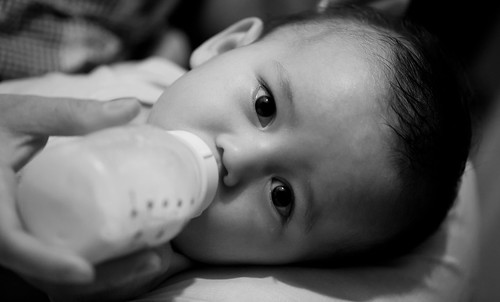
I do what I can to avoid exposing my family to BPA, which is a toxic, hormone-disrupting chemical that has been linked to cancer, obesity, and a slew of other health problems.
I make sure my baby son's bottles are made from either glass or BPA-free plastic. I try to buy tomatoes in jars or boxes instead of cans. I avoid polycarbonate #7 plastic bottles. Still, I can't completely eliminate BPA, which stands for bisphenol-A, from our lives. The use of BPA, and chemcials like it, is so widespread that breaking entirely free from it would simply be impossible.
So I was hoping the FDA would help me and other Americans out by barring BPA from food packaging. Such a move would eliminate BPA's major route into our bodies.
Instead, in a decision announced late Friday afternoon, the FDA rejected a ban that NRDC had first petitioned for in 2008.
"We believe the FDA made the wrong call," says Dr. Sarah Janssen, an NRDC scientist who's also the mother of a toddler. “The agency has failed again to protect our health and safety -- in the face of scientific studies that continue to raise disturbing questions about the long-term effects of BPA exposures, especially in fetuses, babies, and young children."
The European Union, Canada, China, and at least five other countries (as well as 11 U.S. states) have already banned BPA from children’s products. Some companies have already begun voluntarily removing BPA from their products and clearly marking them as "BPA-free." Unfortunately, we don't know what they're replacing BPA with. There is an entire family of BPA-like chemicals, called phthalates, which are similarly suspect.
As long as the FDA continues to side with the chemical industry over children, parents are left to sort out what's best for our kids -- and this is not the sort of thing where instinct and common sense suffice. After all, who would think that cash register receipts might be dangerous? That's right -- many contain BPA.
Here are some basic rules of thumb for avoiding BPA:
- Make sure plastic sippy cups and baby bottles are labeled BPA-free; or use glass or stainless steel instead.
- At the grocery store, choose glass jars or cardboard packaging instead of cans for processed foods, like soup or tomatoes. Acidic, salty, and fatty foods encourage BPA to leach from can linings into food.
- Look for BPA-free water bottles made with Eco-Free coating (Sigg) or Tritan (Nalgene). Choose stainless steel bottles over aluminum, which may contain BPA in the lining.
- Use glass containers for microwaving and storing food.
- Check with your dentist to find out if sealants and fillings are BPA-free.
Assurances from industry aren't enough for me. That's why I'm telling my senator to support the Safe Chemicals Act. This legislation will overhaul the way chemicals are regulated in this country. Hopefully, the government will start putting our health first.
Image: Dillan K/Flickr
http://PonicPods.com

No comments:
Post a Comment